
Engagement Ring Details: A Guide to the Choices Behind the Design
When you picture an engagement ring, you probably picture the stone. But the details around it — the setting style, the claw shape, the orientation, even the way the ring sits in relation to a future wedding band — are what actually shape how a ring looks, feels, and wears day to day. These details are often where the real personality of a ring comes through, and understanding them can make the bespoke process feel a lot less overwhelming.
Here's a guide to some of the details that are available to you when you are designing a bespoke ring with KIND Collection.
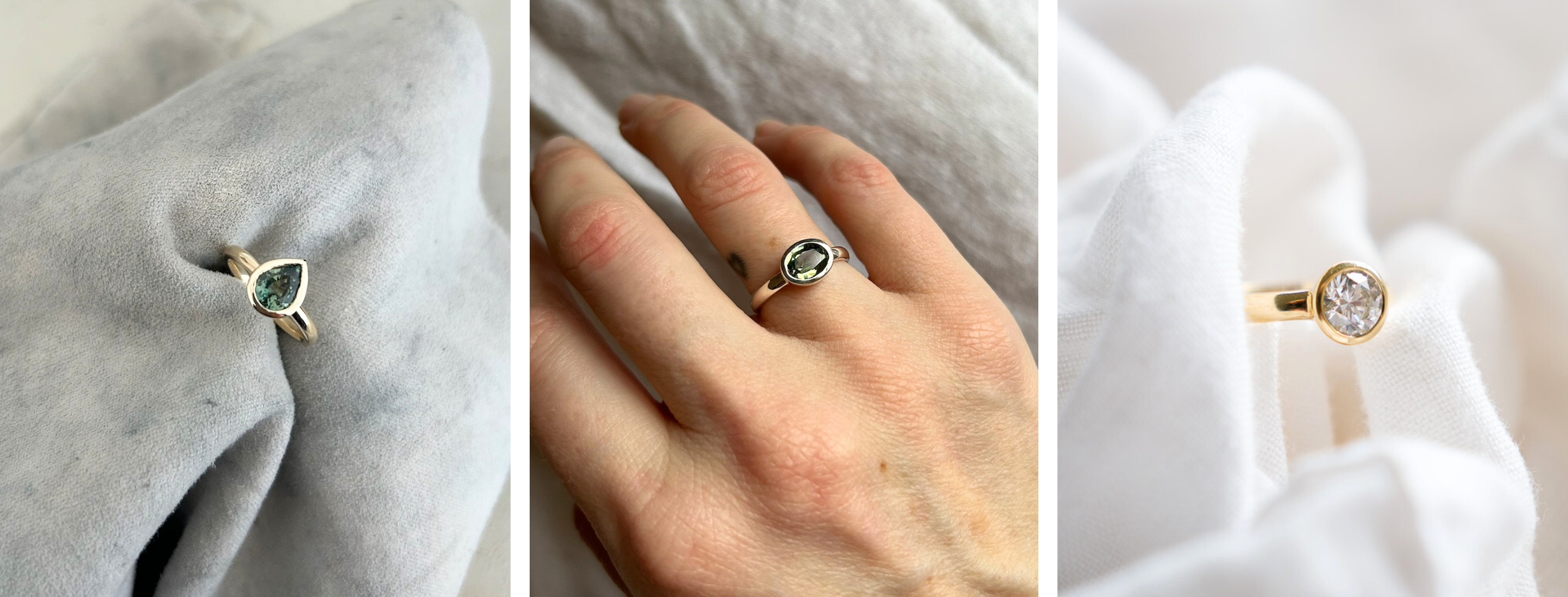
Bezel Set Engagement Rings
Bezel Setting
A bezel setting surrounds the stone entirely with a rim of metal, holding it securely all the way around rather than gripping it at individual points. The result is sleek, modern, and reassuringly protective — the stone sits flush and safe, making this a brilliant choice for anyone with an active lifestyle or hands-on daily life. It also gives a slightly more contemporary, architectural feel than a traditional claw setting, with clean lines and very little metal visible beyond the rim itself.
Claw Settings
Claw settings hold a stone in place using individual metal prongs, allowing more light to reach the stone from underneath and giving it a slightly more elevated, sparkling presence than a bezel. Within claw settings, there are several distinct styles, each with its own character.
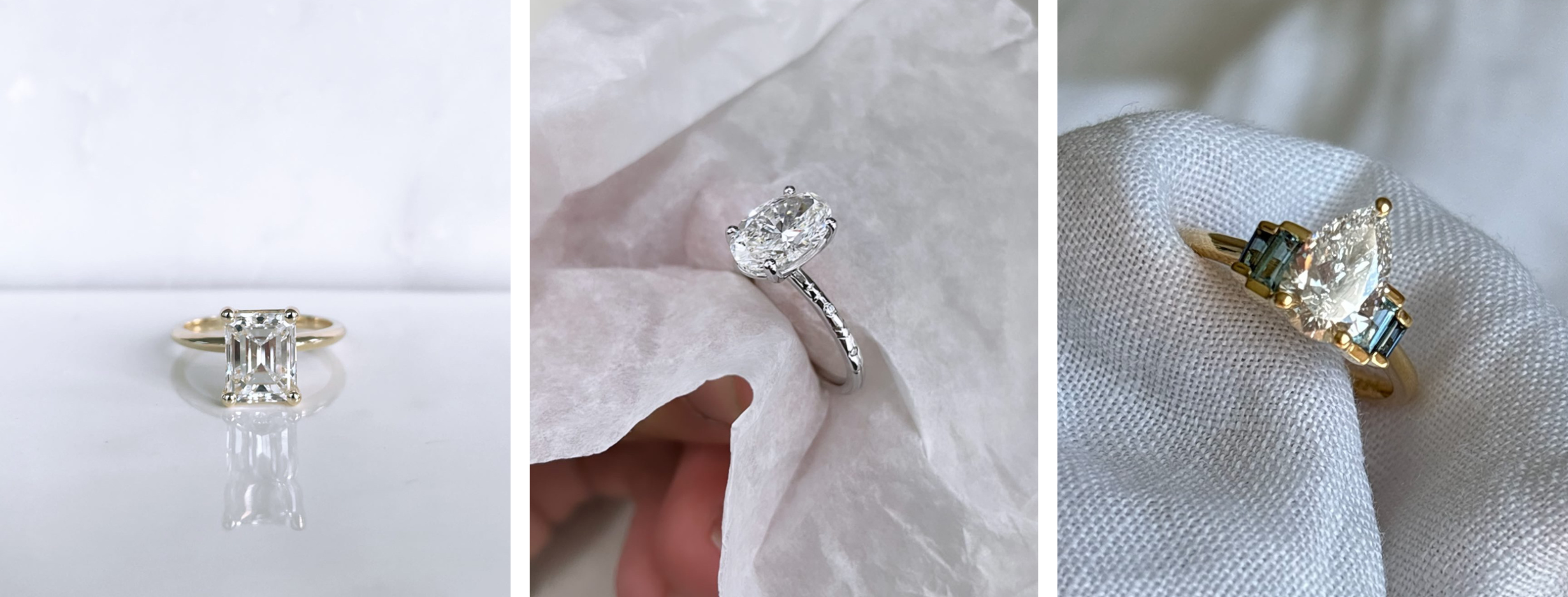
Dot Claw Engagement Rings
Dot Claws: A delicate variation where each claw is finished with a tiny rounded dot or ball at the tip, rather than a sharp point. It's a subtle detail, but it softens the overall look of the setting and can add a touch of vintage charm.
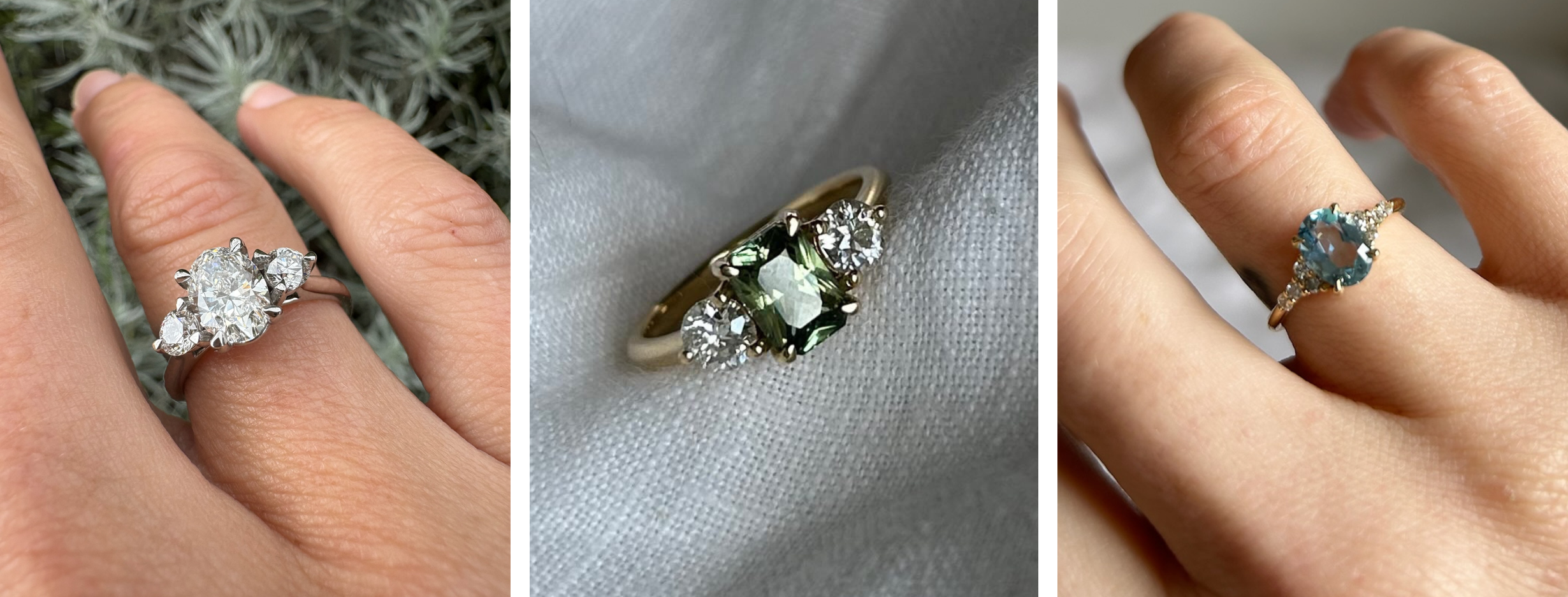
Tiger Claw Engagement Rings
Tiger Claws: Slightly more pronounced and sculptural than a standard claw, tiger claws curve in a way that echoes a claw in the most literal sense. They add visual interest and a slightly bolder, more textural feel to a setting.
Double Claw: Rather than a single prong at each point, double claws use two slimmer prongs grouped together. This offers extra security for the stone while keeping a light, delicate appearance.
4-Claw / 6-Claw: The most familiar claw configurations. A 4-claw setting uses four prongs, typically positioned at the north, south, east, and west points of the stone, and tends to show more of the stone itself, letting in more light. A 6-claw setting adds two further prongs for extra security, which is often the better choice for larger stones or for anyone who wants extra peace of mind during daily wear.
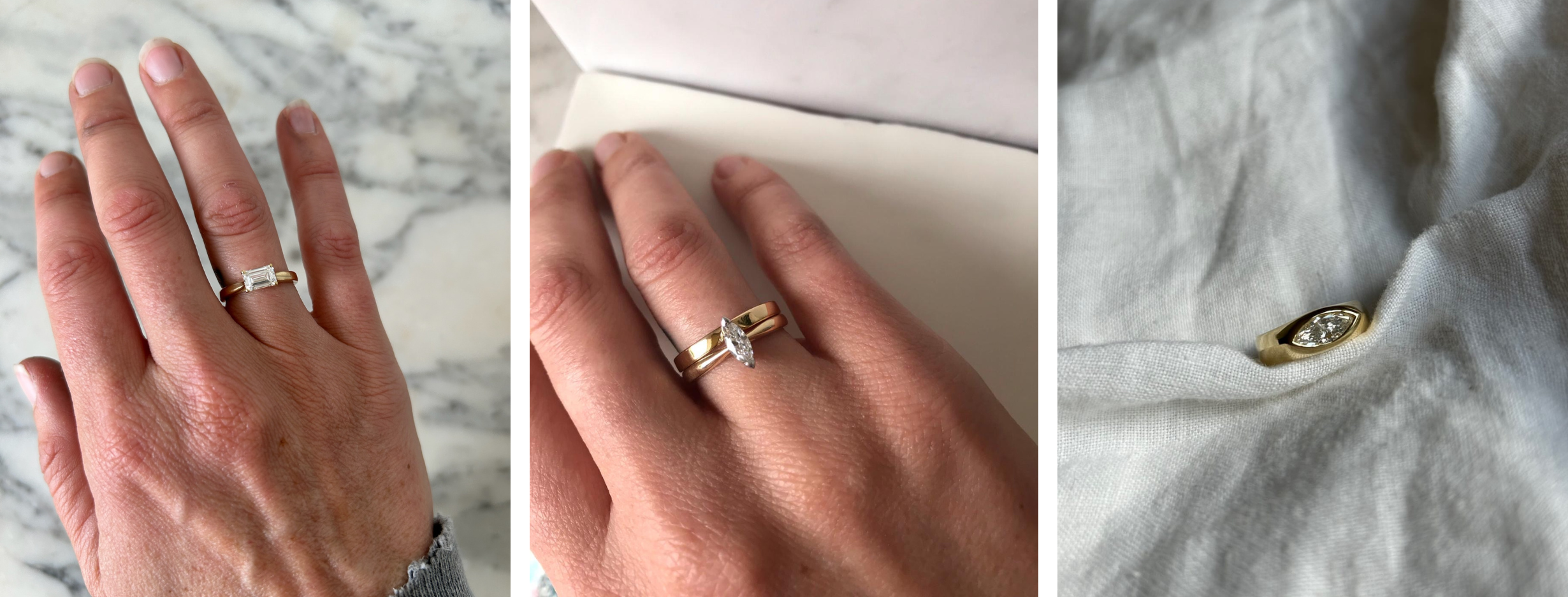
Left: East-to-West Engagement Ring, Middle: North-to-South Engagement Ring, Right: East-to-West Engagement Ring
North/South/East/West
This refers to the orientation of a stone relative to the band — most commonly relevant for marquise, oval, or pear shaped stones, which have an obvious directional shape. A north-south orientation runs the stone vertically along the finger, the most traditional and classic placement. An east-west orientation turns the stone sideways, running horizontally across the finger instead. East-west settings are popular for their slightly unexpected, modern feel — the same stone, but with a noticeably different presence on the hand.
Wed Fit
A wed fit ring is designed to sit slightly higher off the finger, leaving enough clearance underneath for a wedding band to slot in snugly alongside it later. This is worth discussing early if you know a wedding ring will eventually sit next to the engagement ring, as it ensures the two pieces work together comfortably as a pair rather than competing for space.
Non-Wed Fit
The alternative approach, where the ring is designed to sit lower and closer to the finger, without anticipating another band sitting directly alongside it. This often gives a more streamlined, low-profile look and can feel more comfortable for those who don't plan to wear a separate wedding ring stacked underneath.
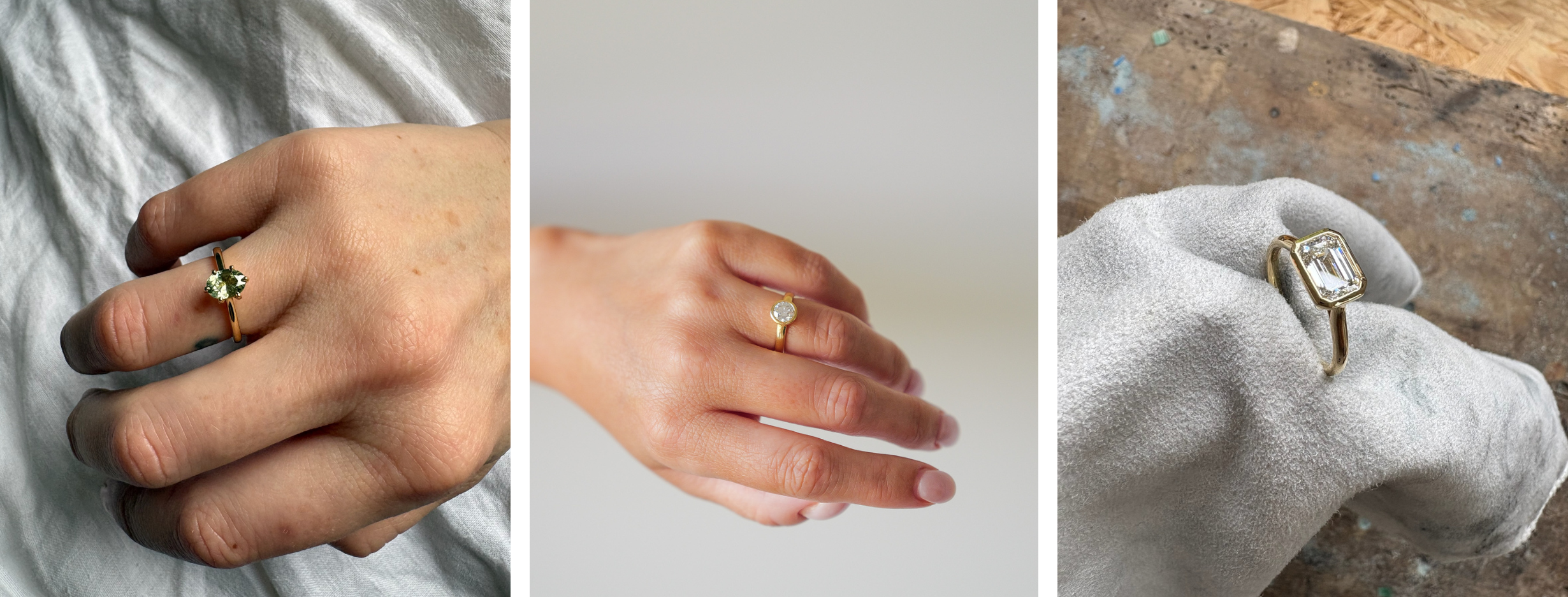
Solitaire Engagement Ring
Solitaire
The simplest and most enduring engagement ring style: a single stone, set alone, with no additional stones. A solitaire puts the spotlight entirely on the central stone — its cut, its colour, its character.
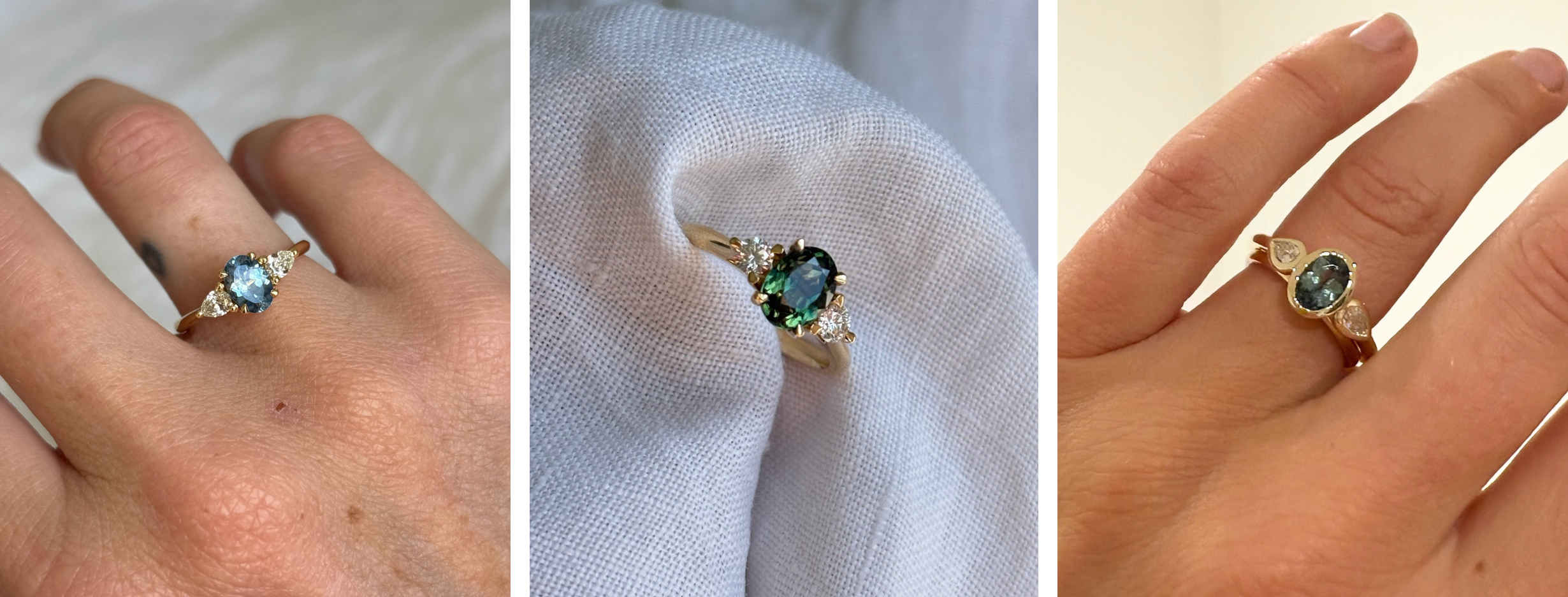
Trilogy Engagement Ring
Trilogy
A trilogy features three stones set in a row, typically with a larger central stone flanked by two smaller ones on either side. Trilogies often carry symbolic meaning — past, present, and future. Trilogy rings are a great way to bring in a hue of colour with gemstones, balancing the contrasting outer stones against the central focal stone.
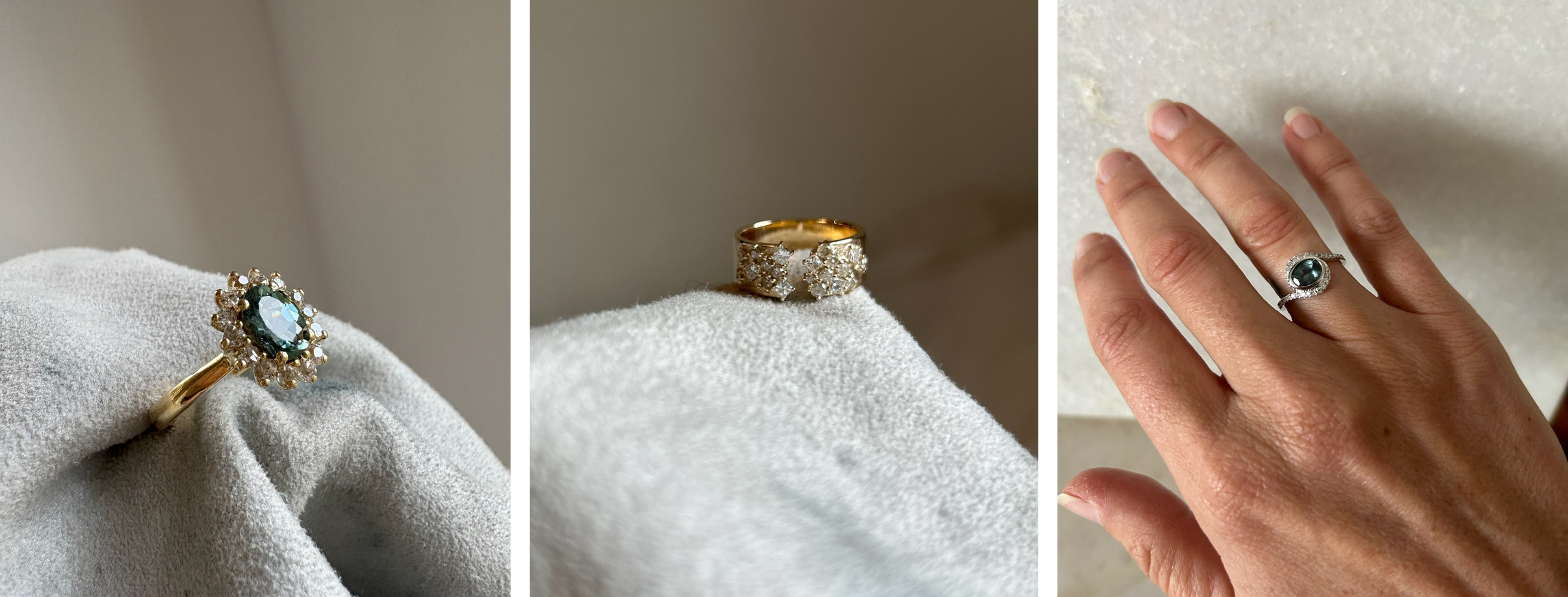
Cluster Detailed Engagement Rings
Cluster Detail
A cluster setting groups multiple smaller stones closely together, often surrounding a central stone, to create the visual impression of one larger, more dramatic shape. Clusters tend to have a slightly vintage quality, and they're a lovely way to incorporate smaller stones — including inherited diamonds from an old or reworked piece — into something that reads as a single striking design.
Not sure which combination is right for you? That's exactly what your bespoke appointment is for. Bring along anything you're drawn to, and we'll talk through what will work best for the stone, the lifestyle, and the look you have in mind. Book an appointment by clicking here.